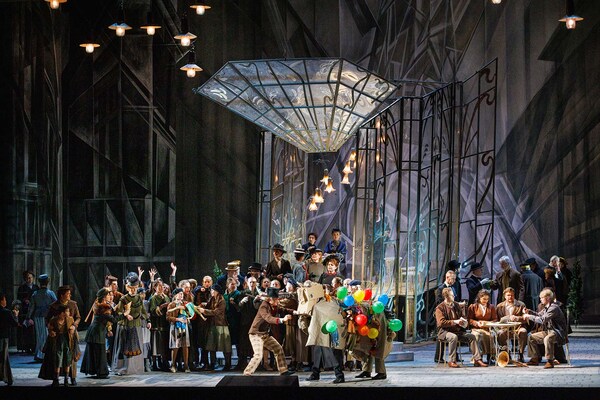
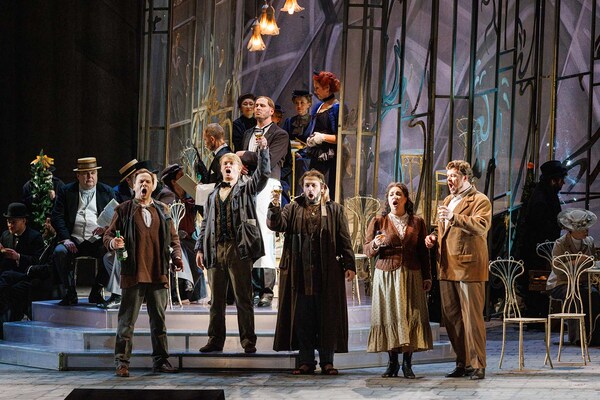
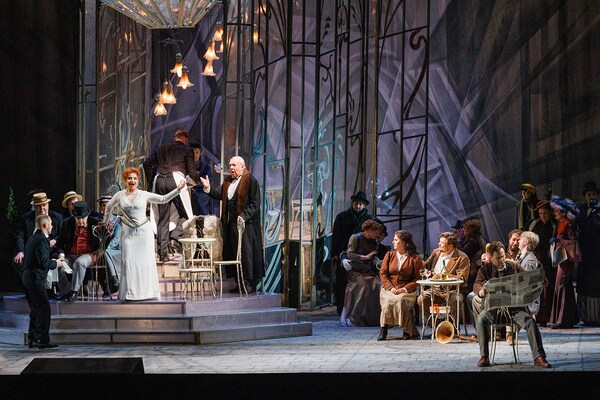
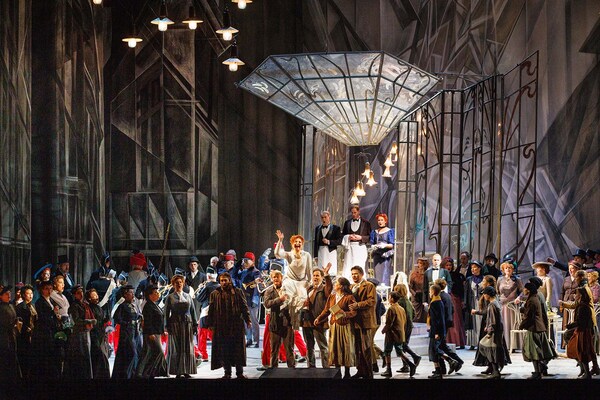
Goes straight to the heart: the story of young people in search of happiness.
Scenes of „La vie de Bohème“ (Henri Murger) in four pictures
Libretto by Giuseppe Giacosa and Luigi Illica
Performed in Italian with German and English surtitles
Premiere
23. October 1983
Dates & Cast
- Conductor Lorenzo Passerini (05., 07., 11., 19.afternoon, 19.evening, 26.afternoon, 26.evening December 2026, 02.afternoon, 02.evening, 09., 16. January, 11. February 2027), Adam Hickox (16., 22., 28. May, 02. June 2027)
- Inszenierung nach Christine Mielitz
- Set & Costumes Peter Heilein
- Lighting Design Friedewalt Degen
- Choir Jonathan Becker
- Children Choir Claudia Sebastian-Bertsch, Kinderchor der Semperoper Dresden
- Dramaturgy Mathias Rank
- Mimì Amina Edris (05., 07., 11., 19., 26. December 2026, 02., 16. January 2027), Mariangela Sicilia (19., 26. December 2026, 02., 09. January, 11. February, 28. May, 02. June 2027), Carolina López Moreno (16., 22. May 2027)
- Musetta N.N. (05., 07., 11. December 2026), Rosalia Cid (19., 26. December 2026, 02., 16. January, 11. February 2027), Jasmin Delfs (19., 26. December 2026, 02., 09. January 2027), Natasha Gesto (16., 22., 28. May, 02. June 2027)
- Rodolfo Pene Pati (05., 07., 11., 19., 26. December 2026, 02., 16. January 2027), Kang Wang (19., 26. December 2026, 02. January, 11. February 2027), Galeano Salas (09. January 2027), René Barbera (16., 22., 28. May, 02. June 2027)
- Marcello Danylo Matviienko (05., 07., 11., 19., 26. December 2026, 02. January, 16. May 2027), Stefan Astakhov (19., 26. December 2026, 02. January 2027), Sean Michael Plumb (09., 16. January, 11. February 2027)
- Schaunard Neven Crnić (05., 07., 11., 19., 26. December 2026, 02. January, 11. February, 02. June 2027), Thomas Mole (19., 26. December 2026, 16. January 2027), Anton Beliaev (02., 09. January, 16., 22., 28. May 2027)
- Colline Aleksei Kulagin (05., 07., 11., 19., 26. December 2026, 02. January 2027), Peter Kellner (19., 26. December 2026, 02. January 2027), Vladyslav Buialskyi (09., 16. January, 11. February, 22., 28. May, 02. June 2027), N.N. (16. May 2027)
- Benoît Matthias Henneberg
- Alcindoro Andreas Scheibner
- Parpignol Frank Blümel, Jun-Seok Bang
- Sergeant der Zollwache Holger Steinert, Matthias Beutlich
- Ein Zöllner Andreas Heinze
- Ein Händler Hyunkwang Jo, Kyungrak Jeong
- Conductor Lorenzo Passerini
- Inszenierung nach Christine Mielitz
- Set & Costumes Peter Heilein
- Lighting Design Friedewalt Degen
- Choir Jonathan Becker
- Children Choir Claudia Sebastian-Bertsch, Kinderchor der Semperoper Dresden
- Dramaturgy Mathias Rank
Kinderchor der Semperoper Dresden
Sächsische Staatskapelle Dresden
- Mimì Amina Edris
- Musetta N.N.
- Rodolfo Pene Pati
- Marcello Danylo Matviienko
- Schaunard Neven Crnić
- Colline Aleksei Kulagin
- Benoît Matthias Henneberg
- Alcindoro Andreas Scheibner
- Parpignol Frank Blümel, Jun-Seok Bang
- Sergeant der Zollwache Holger Steinert, Matthias Beutlich
- Ein Zöllner Andreas Heinze
- Ein Händler Hyunkwang Jo, Kyungrak Jeong
- Conductor Lorenzo Passerini
- Inszenierung nach Christine Mielitz
- Set & Costumes Peter Heilein
- Lighting Design Friedewalt Degen
- Choir Jonathan Becker
- Children Choir Claudia Sebastian-Bertsch, Kinderchor der Semperoper Dresden
- Dramaturgy Mathias Rank
Kinderchor der Semperoper Dresden
Sächsische Staatskapelle Dresden
- Mimì Amina Edris
- Musetta N.N.
- Rodolfo Pene Pati
- Marcello Danylo Matviienko
- Schaunard Neven Crnić
- Colline Aleksei Kulagin
- Benoît Matthias Henneberg
- Alcindoro Andreas Scheibner
- Parpignol Frank Blümel, Jun-Seok Bang
- Sergeant der Zollwache Holger Steinert, Matthias Beutlich
- Ein Zöllner Andreas Heinze
- Ein Händler Hyunkwang Jo, Kyungrak Jeong
- Conductor Lorenzo Passerini
- Inszenierung nach Christine Mielitz
- Set & Costumes Peter Heilein
- Lighting Design Friedewalt Degen
- Choir Jonathan Becker
- Children Choir Claudia Sebastian-Bertsch, Kinderchor der Semperoper Dresden
- Dramaturgy Mathias Rank
Kinderchor der Semperoper Dresden
Sächsische Staatskapelle Dresden
- Mimì Amina Edris
- Musetta N.N.
- Rodolfo Pene Pati
- Marcello Danylo Matviienko
- Schaunard Neven Crnić
- Colline Aleksei Kulagin
- Benoît Matthias Henneberg
- Alcindoro Andreas Scheibner
- Parpignol Frank Blümel, Jun-Seok Bang
- Sergeant der Zollwache Holger Steinert, Matthias Beutlich
- Ein Zöllner Andreas Heinze
- Ein Händler Hyunkwang Jo, Kyungrak Jeong
- Conductor Lorenzo Passerini
- Inszenierung nach Christine Mielitz
- Set & Costumes Peter Heilein
- Lighting Design Friedewalt Degen
- Choir Jonathan Becker
- Children Choir Claudia Sebastian-Bertsch, Kinderchor der Semperoper Dresden
- Dramaturgy Mathias Rank
Kinderchor der Semperoper Dresden
Sächsische Staatskapelle Dresden
- Mimì Mariangela Sicilia
- Musetta Jasmin Delfs
- Rodolfo Kang Wang
- Marcello Stefan Astakhov
- Schaunard Thomas Mole
- Colline Peter Kellner
- Benoît Matthias Henneberg
- Alcindoro Andreas Scheibner
- Parpignol Frank Blümel, Jun-Seok Bang
- Sergeant der Zollwache Holger Steinert, Matthias Beutlich
- Ein Zöllner Andreas Heinze
- Ein Händler Hyunkwang Jo, Kyungrak Jeong
- Conductor Lorenzo Passerini
- Inszenierung nach Christine Mielitz
- Set & Costumes Peter Heilein
- Lighting Design Friedewalt Degen
- Choir Jonathan Becker
- Children Choir Claudia Sebastian-Bertsch, Kinderchor der Semperoper Dresden
- Dramaturgy Mathias Rank
Kinderchor der Semperoper Dresden
Sächsische Staatskapelle Dresden
- Mimì Amina Edris
- Musetta Rosalia Cid
- Rodolfo Pene Pati
- Marcello Danylo Matviienko
- Schaunard Neven Crnić
- Colline Aleksei Kulagin
- Benoît Matthias Henneberg
- Alcindoro Andreas Scheibner
- Parpignol Frank Blümel, Jun-Seok Bang
- Sergeant der Zollwache Holger Steinert, Matthias Beutlich
- Ein Zöllner Andreas Heinze
- Ein Händler Hyunkwang Jo, Kyungrak Jeong
- Conductor Lorenzo Passerini
- Inszenierung nach Christine Mielitz
- Set & Costumes Peter Heilein
- Lighting Design Friedewalt Degen
- Choir Jonathan Becker
- Children Choir Claudia Sebastian-Bertsch, Kinderchor der Semperoper Dresden
- Dramaturgy Mathias Rank
Kinderchor der Semperoper Dresden
Sächsische Staatskapelle Dresden
- Mimì Mariangela Sicilia
- Musetta Jasmin Delfs
- Rodolfo Kang Wang
- Marcello Stefan Astakhov
- Schaunard Thomas Mole
- Colline Peter Kellner
- Benoît Matthias Henneberg
- Alcindoro Andreas Scheibner
- Parpignol Frank Blümel, Jun-Seok Bang
- Sergeant der Zollwache Holger Steinert, Matthias Beutlich
- Ein Zöllner Andreas Heinze
- Ein Händler Hyunkwang Jo, Kyungrak Jeong
- Conductor Lorenzo Passerini
- Inszenierung nach Christine Mielitz
- Set & Costumes Peter Heilein
- Lighting Design Friedewalt Degen
- Choir Jonathan Becker
- Children Choir Claudia Sebastian-Bertsch, Kinderchor der Semperoper Dresden
- Dramaturgy Mathias Rank
Kinderchor der Semperoper Dresden
Sächsische Staatskapelle Dresden
- Mimì Amina Edris
- Musetta Rosalia Cid
- Rodolfo Pene Pati
- Marcello Danylo Matviienko
- Schaunard Neven Crnić
- Colline Aleksei Kulagin
- Benoît Matthias Henneberg
- Alcindoro Andreas Scheibner
- Parpignol Frank Blümel, Jun-Seok Bang
- Sergeant der Zollwache Holger Steinert, Matthias Beutlich
- Ein Zöllner Andreas Heinze
- Ein Händler Hyunkwang Jo, Kyungrak Jeong
- Conductor Lorenzo Passerini
- Inszenierung nach Christine Mielitz
- Set & Costumes Peter Heilein
- Lighting Design Friedewalt Degen
- Choir Jonathan Becker
- Children Choir Claudia Sebastian-Bertsch, Kinderchor der Semperoper Dresden
- Dramaturgy Mathias Rank
Kinderchor der Semperoper Dresden
Sächsische Staatskapelle Dresden
- Mimì Mariangela Sicilia
- Musetta Jasmin Delfs
- Rodolfo Kang Wang
- Marcello Stefan Astakhov
- Schaunard Anton Beliaev
- Colline Peter Kellner
- Benoît Matthias Henneberg
- Alcindoro Andreas Scheibner
- Parpignol Frank Blümel, Jun-Seok Bang
- Sergeant der Zollwache Holger Steinert, Matthias Beutlich
- Ein Zöllner Andreas Heinze
- Ein Händler Hyunkwang Jo, Kyungrak Jeong
- Conductor Lorenzo Passerini
- Inszenierung nach Christine Mielitz
- Set & Costumes Peter Heilein
- Lighting Design Friedewalt Degen
- Choir Jonathan Becker
- Children Choir Claudia Sebastian-Bertsch, Kinderchor der Semperoper Dresden
- Dramaturgy Mathias Rank
Kinderchor der Semperoper Dresden
Sächsische Staatskapelle Dresden
- Mimì Amina Edris
- Musetta Rosalia Cid
- Rodolfo Pene Pati
- Marcello Danylo Matviienko
- Schaunard Neven Crnić
- Colline Aleksei Kulagin
- Benoît Matthias Henneberg
- Alcindoro Andreas Scheibner
- Parpignol Frank Blümel, Jun-Seok Bang
- Sergeant der Zollwache Holger Steinert, Matthias Beutlich
- Ein Zöllner Andreas Heinze
- Ein Händler Hyunkwang Jo, Kyungrak Jeong
- Conductor Lorenzo Passerini
- Inszenierung nach Christine Mielitz
- Set & Costumes Peter Heilein
- Lighting Design Friedewalt Degen
- Choir Jonathan Becker
- Children Choir Claudia Sebastian-Bertsch, Kinderchor der Semperoper Dresden
- Dramaturgy Mathias Rank
Kinderchor der Semperoper Dresden
Sächsische Staatskapelle Dresden
- Mimì Mariangela Sicilia
- Musetta Jasmin Delfs
- Rodolfo Galeano Salas
- Marcello Sean Michael Plumb
- Schaunard Anton Beliaev
- Colline Vladyslav Buialskyi
- Benoît Matthias Henneberg
- Alcindoro Andreas Scheibner
- Parpignol Frank Blümel, Jun-Seok Bang
- Sergeant der Zollwache Holger Steinert, Matthias Beutlich
- Ein Zöllner Andreas Heinze
- Ein Händler Hyunkwang Jo, Kyungrak Jeong
- Conductor Lorenzo Passerini
- Inszenierung nach Christine Mielitz
- Set & Costumes Peter Heilein
- Lighting Design Friedewalt Degen
- Choir Jonathan Becker
- Children Choir Claudia Sebastian-Bertsch, Kinderchor der Semperoper Dresden
- Dramaturgy Mathias Rank
Kinderchor der Semperoper Dresden
Sächsische Staatskapelle Dresden
- Mimì Amina Edris
- Musetta Rosalia Cid
- Rodolfo Pene Pati
- Marcello Sean Michael Plumb
- Schaunard Thomas Mole
- Colline Vladyslav Buialskyi
- Benoît Matthias Henneberg
- Alcindoro Andreas Scheibner
- Parpignol Frank Blümel, Jun-Seok Bang
- Sergeant der Zollwache Holger Steinert, Matthias Beutlich
- Ein Zöllner Andreas Heinze
- Ein Händler Kyungrak Jeong, Hyunkwang Jo
- Conductor Lorenzo Passerini
- Inszenierung nach Christine Mielitz
- Set & Costumes Peter Heilein
- Lighting Design Friedewalt Degen
- Choir Jonathan Becker
- Children Choir Claudia Sebastian-Bertsch, Kinderchor der Semperoper Dresden
- Dramaturgy Mathias Rank
Kinderchor der Semperoper Dresden
Sächsische Staatskapelle Dresden
- Mimì Mariangela Sicilia
- Musetta Rosalia Cid
- Rodolfo Kang Wang
- Marcello Sean Michael Plumb
- Schaunard Neven Crnić
- Colline Vladyslav Buialskyi
- Benoît Matthias Henneberg
- Alcindoro Andreas Scheibner
- Parpignol Frank Blümel, Jun-Seok Bang
- Sergeant der Zollwache Holger Steinert, Matthias Beutlich
- Ein Zöllner Andreas Heinze
- Ein Händler Kyungrak Jeong, Hyunkwang Jo
- Conductor Adam Hickox
- Inszenierung nach Christine Mielitz
- Set & Costumes Peter Heilein
- Lighting Design Friedewalt Degen
- Choir Jonathan Becker
- Children Choir Claudia Sebastian-Bertsch, Kinderchor der Semperoper Dresden
- Dramaturgy Mathias Rank
Kinderchor der Semperoper Dresden
Sächsische Staatskapelle Dresden
- Mimì Carolina López Moreno
- Musetta Natasha Gesto
- Rodolfo René Barbera
- Marcello Danylo Matviienko
- Schaunard Anton Beliaev
- Colline N.N.
- Benoît Matthias Henneberg
- Alcindoro Andreas Scheibner
- Parpignol Frank Blümel, Jun-Seok Bang
- Sergeant der Zollwache Holger Steinert, Matthias Beutlich
- Ein Zöllner Andreas Heinze
- Ein Händler Hyunkwang Jo, Kyungrak Jeong
In brief
A shared flat in Paris’s bohemian world of artists and students: The lives of the poet Rodolfo and his friends are filled with talk of freedom, independence, art, as well as financial hardship. When Rodolfo falls in love with his neighbour Mimì, everything seems to have taken a turn for the better, but poverty and Mimì’s illness overshadow the relationship. The young couple become closely attached. Later they separate, only rediscovering their love when it is already too late. At the time of its premiere in 1896, Puccini’s best-known work broke new ground in Italian opera through its prosaic scenery and everyday subject matter. This staging by Christine Mielitz of Puccini’s fourth opera is one of the most popular productions at the Semperoper.
Storyline
First act
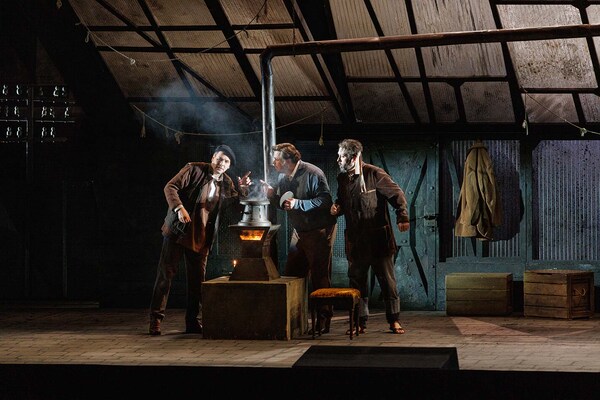
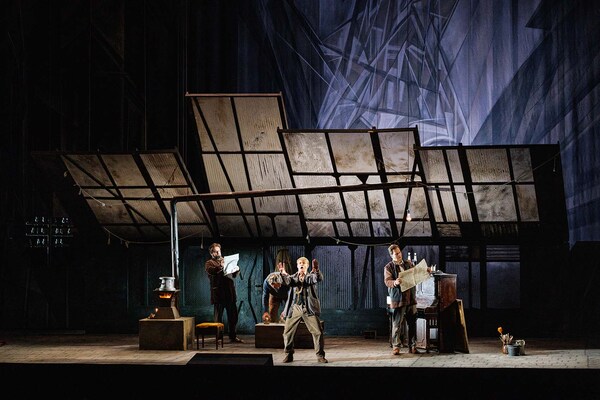
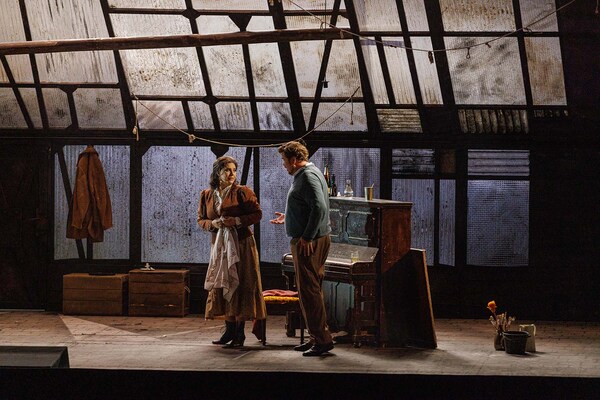
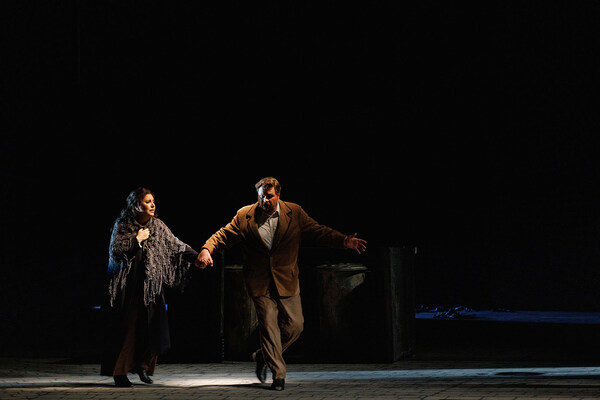
Christmas Eve, in an icy-cold garret looking onto the roofs of the Latin Quarter in Paris, around the turn of the century. Just as Marcello, fingers numb with cold, attempts to finish his painting which seems to remain eternally unfinished, Rodolfo compels himself to write. Both fail. To save the last chair from being broken up and burnt, Rodolfo sacrifices the manuscript of his play, act for act, to the flames. Colline, returning unsuccessful from the closed pawnbroker’s shop, is just able to catch a glimpse of the last warming glow of the stove. Schaunard then appears with his treasures which he was able to get by trickery from a snobbish Englishman due to the murder – announced with much theatricality – of the latter’s parrot. The „sumptuous feast“, full of merriment and high spirits, is interrupted by Benoît, the landlord, who wishes to collect the overdue rent but he can be cunningly sent away owing to his own double standard of morals. They decide to spend the rest of Christmas Eve at Café Momus. It is only Rodolfo who stays behind for the time being in order to write a newspaper article. Then Mimì appears, a neighbour of the Bohemians, and asks for a light for her candle which has gone out. The little seamstress and the poet fall in love in the moonlight of the December evening.
Second act
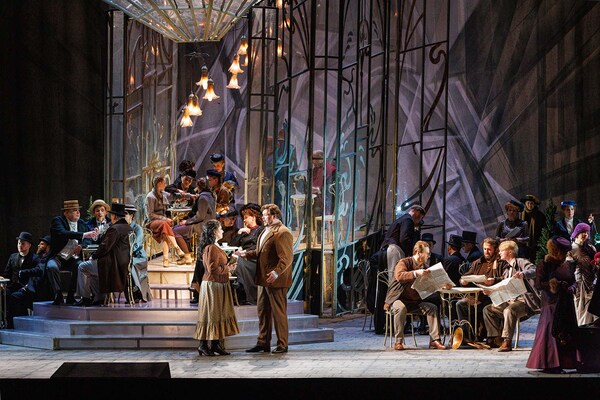
In the bustling, gay throng of the Christmas market in front of Café Momus, Rodolfo introduces Mimì to his circle of Bohemian friends. Marcello’s bitter reasoning about love reaches its climax when the cause of his pain, the coquettishly provocative Musetta, appears on the arm of the elderly councillor, Alcindoro. – She wins Marcello back by her own fascination. The cuckolded Alcindoro is left to pay the bill.
Third act
Ash Wednesday on the bleak outskirts of Paris. Mimì is desperately looking for Rodolfo and hopes that Marcello will give her information and also advice. However, he only advises her cynically to let the jealous poet go. Believing incorrectly that Mimì has already left, Rodolfo tells his friend that ha has parted with the girl because of her fatal illness. A fit of coughing betrays Mimì. Cornered by the situation, Rodolfo assures her that he will „delay“ the parting. Marcello, who had just recommended that love should not be taken so tragically, now himself fails because of the incompatible emotions lingering between himself and Musetta: a renewed quarrel, a renewed parting.
Fourth act
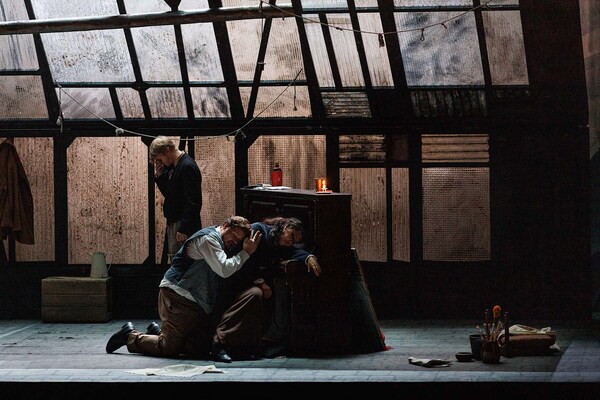
Back in the garret, Marcello and Rodolfo attempt to conceal their feelings with work but the slightest occasion leads their thoughts back to Musetta and Mimì. Colline and Schaunard appear and wish to celebrate a „princely feast“ but they can only afford ... a herring. Musetta’s precipitous entrance with the fatally ill Mimì destroys all pseudo feelings for celebration of the four Bohemians. Deeply affected, they are forced to watch as a human life expires before their very eyes. All attempts to alter fate and bride it with jewels, money or an old coat miscarry. Now the friends are presented with the price of a misspent life. One last time, Rodolfo and Mimì recall their first, tender and loving encounter and then the girl dies. Deeply moved, the Bohemians are left behind.
Explore
La bohème